English Dictation Blog

English Learning Blog

Read practical articles on sentence-based English learning: English dictation tips, shadowing practice guides, and step‑by‑step advice on how to learn English with sentences.

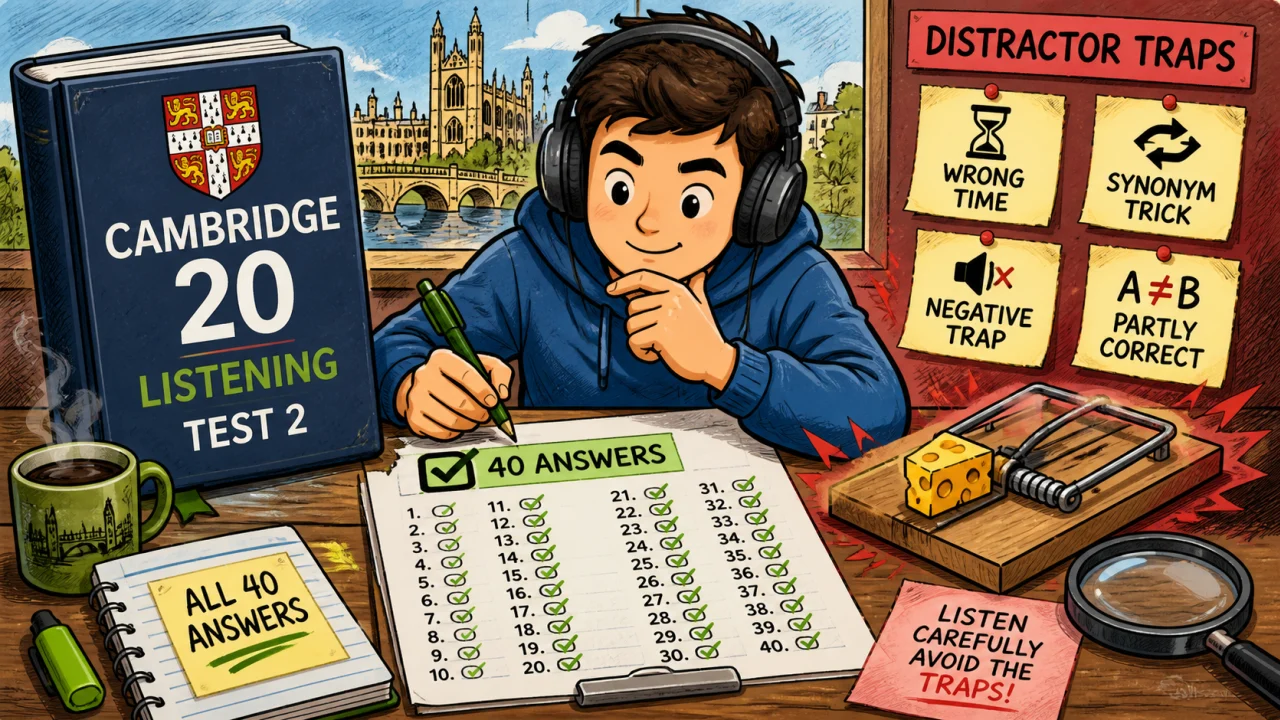
Cambridge 20 Listening Test 2: All 40 Answers and the Traps Behind Them

Cambridge 20 Listening Test 2: All 40 Answers and the Traps Behind Them

Every answer for Cambridge 20 Listening Test 2, with the exact distractor tricks behind each part—so you stop dropping marks you actually earned.

Ethan Brooks
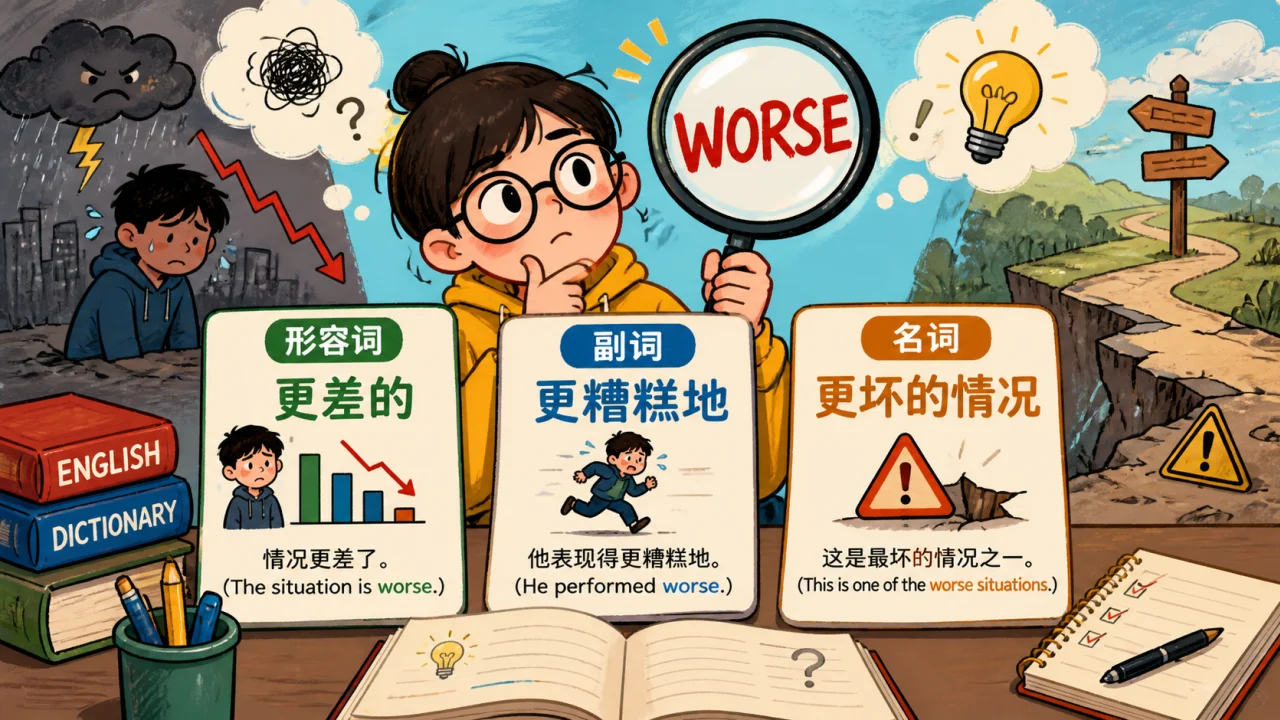
What Does "Worse" Mean? The Word's 3 Grammatical Roles Explained

What Does "Worse" Mean? The Word's 3 Grammatical Roles Explained

Most dictionary entries for "worse" just pile up synonyms without explaining when to use each one. This guide breaks the word down by its three grammatical roles—adjective, adverb, and noun—so you always pick the…

Ava Mitchell
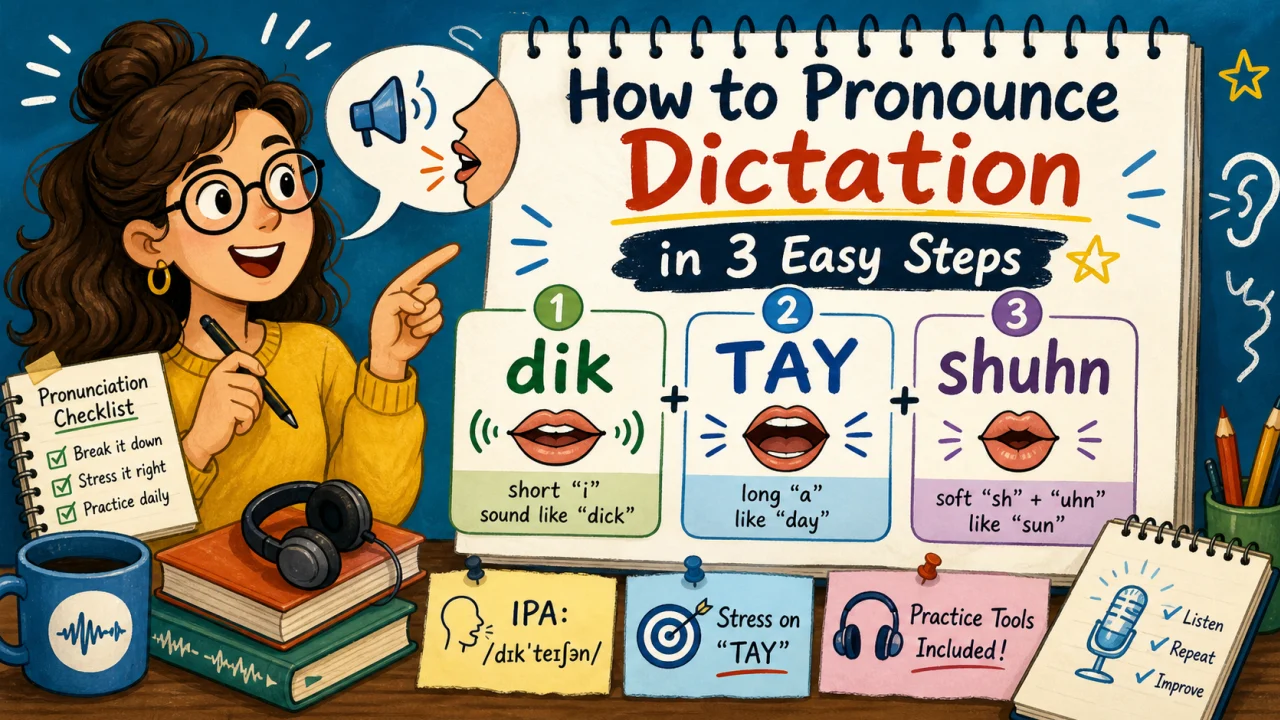
How to Pronounce "Dictation" in 3 Simple Steps

How to Pronounce "Dictation" in 3 Simple Steps

Not sure how to pronounce dictation? Break it into three familiar sounds — dik, TAY, shuhn — and you've got it. Includes the IPA, stress tips, and free practice tools.

Ethan Brooks
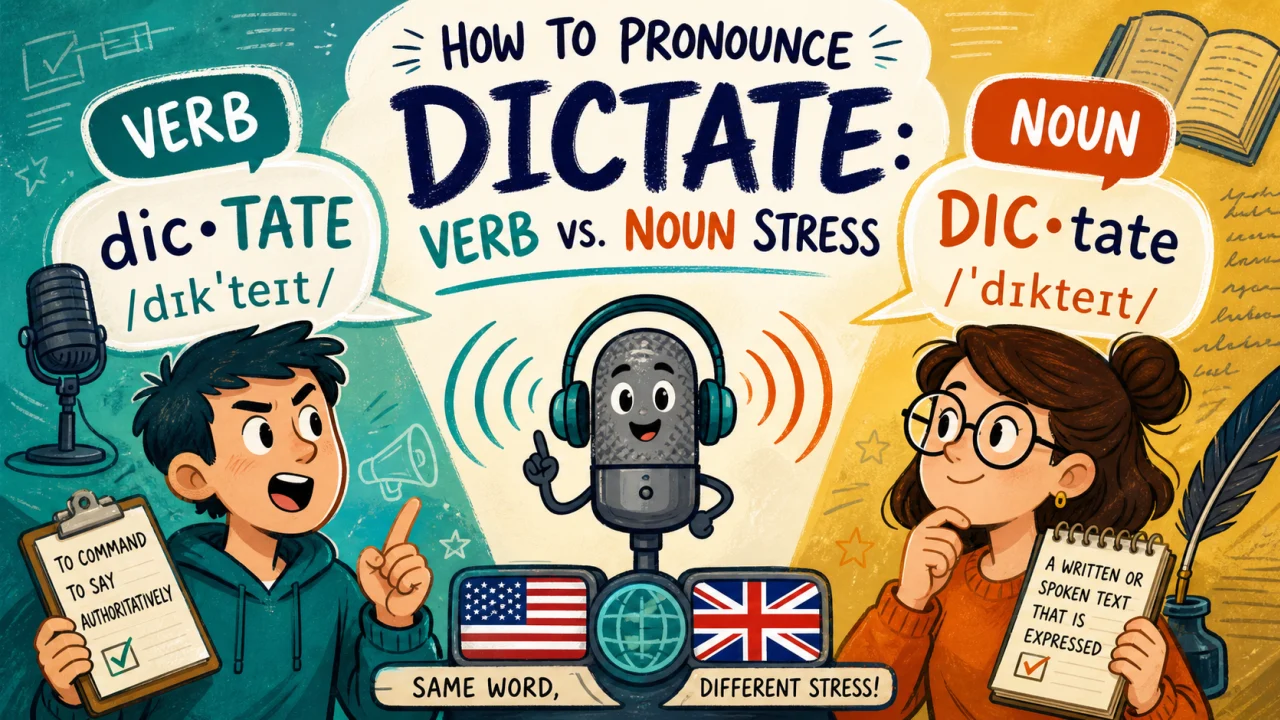
How to Pronounce Dictate: Verb vs. Noun Stress Explained

How to Pronounce Dictate: Verb vs. Noun Stress Explained

Unsure whether to stress the first or second syllable of "dictate"? This guide covers the American and British pronunciations, the verb vs. noun stress shift, IPA breakdowns, and a practice drill to make it stick.

Ava Mitchell
What Does "Dictate" Mean? 5 Definitions Most People Miss

What Does "Dictate" Mean? 5 Definitions Most People Miss

Most people know "dictate" means to speak aloud or give orders — but the word has five distinct meanings that shift dramatically by context. This guide breaks down every definition with real examples so you always…

Ethan Brooks
What Does "Dictation" Mean? 3 Distinct Translations Explained

What Does "Dictation" Mean? 3 Distinct Translations Explained

Dictation doesn't have just one meaning—context determines whether it means oral dictation, a listening exercise, or voice input. This guide breaks down each use case with real examples so you always pick the right…

Ethan Brooks
How to Use "Whose" in English: 3 Patterns Every Learner Needs

How to Use "Whose" in English: 3 Patterns Every Learner Needs

Confused about when and how to use "whose"? This guide breaks it down into 3 clear patterns — interrogative adjective, interrogative pronoun, and relative pronoun — with examples, a quick decision flowchart, and tips…

Ava Mitchell
What Are the Listening Skills? 6 That Change How People Respond to You

What Are the Listening Skills? 6 That Change How People Respond to You

Discover the 6 core listening skills—paying attention, withholding judgment, reflecting, clarifying, summarizing, and empathic responding—and how to actually practice them at work and home.

Ethan Brooks
Dictate in a Sentence: 14 Clear Examples

Dictate in a Sentence: 14 Clear Examples

See how to use "dictate" in a sentence across formal, casual, and academic contexts—14 examples, common mistakes, and a preposition cheat sheet.

Ethan Brooks
Worst Definition: What It Means in Plain English

Worst Definition: What It Means in Plain English

Understand the worst definition as adjective, adverb, noun, and verb—with example sentences, the worse vs. worst rule, common mistakes, and idioms dictionaries skip.

Ethan Brooks
Does They or Do They? The Correct Answer

Does They or Do They? The Correct Answer

"Does they" is always wrong. The correct form is always "do they." Learn the one rule behind subject-verb agreement with pronouns and never second-guess yourself again.

Ethan Brooks
Should've: What It Means and Why You Hear "Should Of"

Should've: What It Means and Why You Hear "Should Of"

You keep writing "should of" but the correct form is always should've — short for "should have." Here's why your ears get fooled and how to fix it in 30 days.

Ethan Brooks