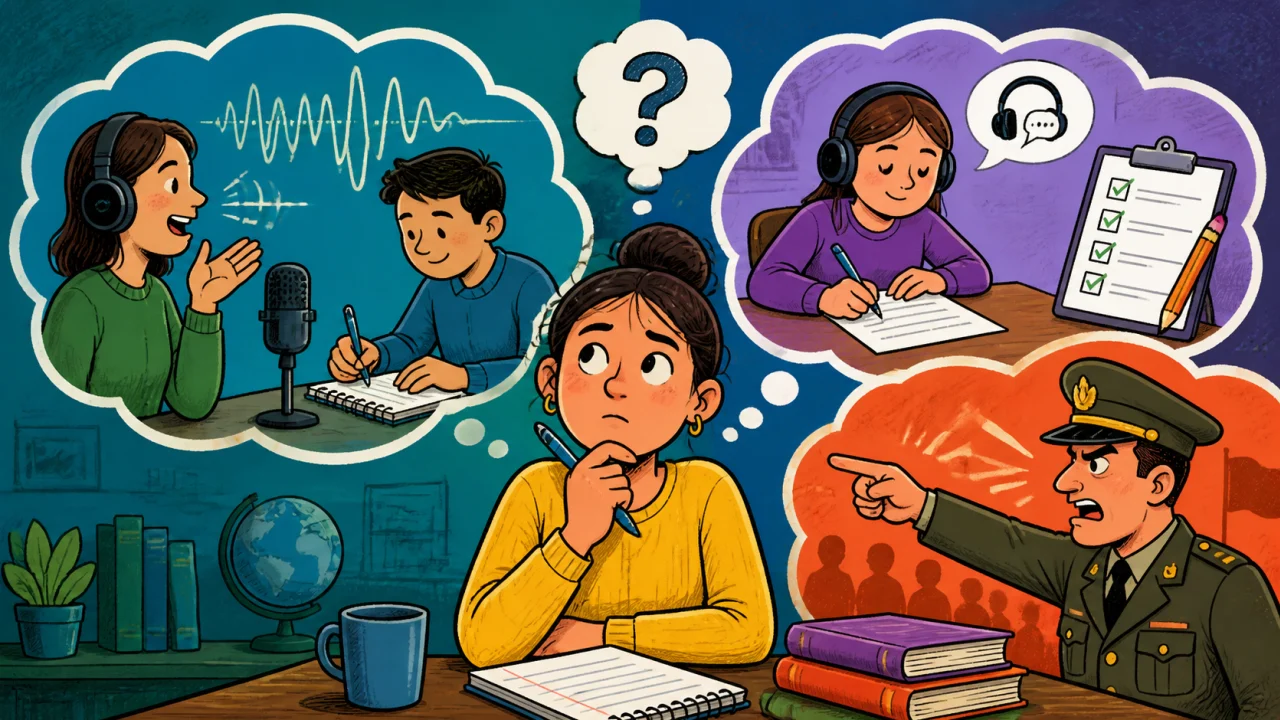

Picking the right translation for "dictation" trips up a surprising number of people—even fluent speakers. Open any major dictionary and you'll find at least two distinct definitions. Use the wrong one in a business email or a language lesson and the confusion is instant. The fix is simple: let context decide.
This article breaks down each meaning of dictation, when to use it, and what to watch out for. By the end, you won't need to second-guess it again.
What the Cambridge Dictionary Actually Says About Dictation
Open the Cambridge English-Chinese Dictionary entry for dictation and you'll see two separate definitions listed. The uncountable noun refers to the act of speaking aloud so someone else can write it down—think oral dictation. The countable noun refers to a language exercise where a teacher reads a passage and students write what they hear—a listening and writing test.
Same word, two very different actions. Most translation errors happen because people grab the first definition without checking the grammatical label.
Meaning 1: Oral Dictation (One Person Speaks, Another Records)
When dictation means "one person speaks and another person transcribes," the correct equivalent is oral dictation or, in formal writing, verbal instruction. The classic workplace scenario: a manager reads an email aloud to an assistant, who types it word for word. In English, you'd say the assistant is "taking dictation."
The PONS Dictionary captures this with the phrase "recording someone's dictation"—the emphasis is on the recording role, not the speaking role. In formal or legal contexts, you'll see slightly elevated phrasing like "verbal instruction" or "as directed by," but the underlying action is the same.

Meaning 2: Listening Exercise (The Classroom and Language-Learning Version)
This is the meaning most students recognize. A teacher reads a passage aloud; students write down exactly what they hear. The Cambridge Dictionary gives a straightforward example: "Our French dictation lasted half an hour." That's the countable noun in action—a specific exercise with a start and an end.
In language learning, dictation has become a structured training method in its own right. The online platform Speechling, for example, offers Chinese listening dictation exercises across more than a dozen difficulty levels—from beginner vocabulary like nouns and everyday phrases up to expert-level passages—using recordings by native speakers. Google Play also hosts an app called Chinese Dictation specifically designed to help non-native speakers practice both Mandarin listening comprehension and character writing through dictation drills.
The "listening + writing" structure is exactly why this meaning translates so cleanly as a listening exercise: you hear it, you write it.
Listening Exercise vs. Recitation from Memory: What's the Difference?
This is where things get genuinely confusing, and most articles skip over it. The difference comes down to the source of the information.
A dictation exercise is audio-driven: you write what you hear in real time. Recitation from memory is recall-driven: you reproduce something you've already memorized, without any audio prompt—like writing out a poem from memory after studying it.
In Hong Kong and Taiwan, dictation is sometimes labeled 默書 (silent writing), which leads mainland Chinese readers to treat the two as interchangeable. They're not. If the original text emphasizes the act of listening, it's a dictation exercise. If it emphasizes reproducing something from memory without external input, that's recitation. Keep them separate.
The Word Family: Dictate, Dictation, Dictator
People searching for the meaning of dictation often end up searching "dictate meaning" and "dictator meaning" in the same session. All three share the Latin root dict-, meaning "to say" or "to command"—but they've each traveled in different directions.
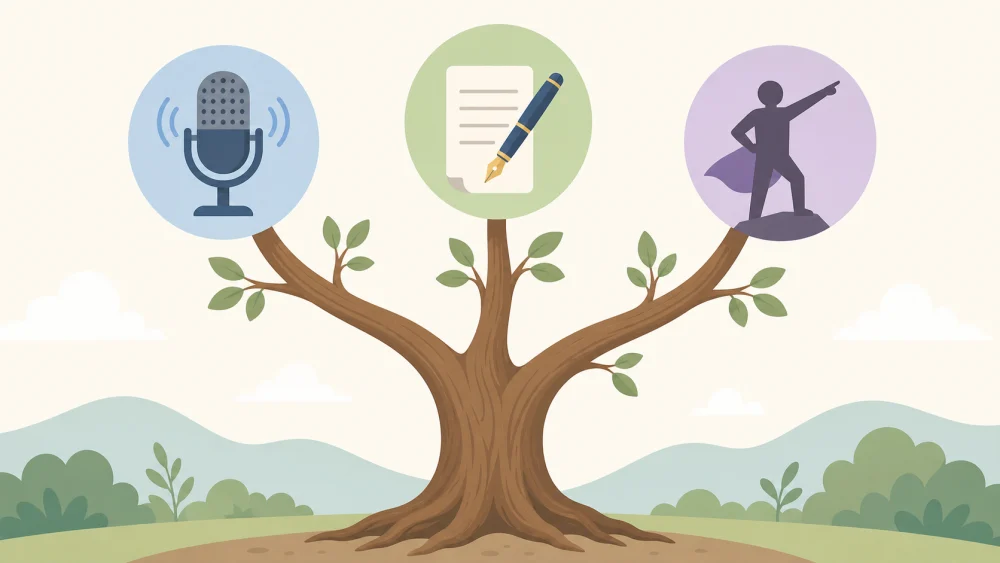
A quick side-by-side: dictate is the verb, meaning either to speak for transcription or to give orders; dictation is the noun form covering the act itself (oral dictation, listening exercise, or voice input depending on context); dictator is the person who commands without consent.
They look similar on the page, but they don't land in the same territory. If you're studying vocabulary, grouping them together by root is far more efficient than learning each one in isolation.
5 Real Scenarios: Which Meaning of Dictation Applies?
Rather than memorizing definitions in the abstract, let the situation tell you which meaning fits.
Scenario 1: Your manager reads an email aloud and asks you to type it up and send it. That's oral dictation—one person speaks, you transcribe. Nothing to do with a test.
Scenario 2: In an English class, your teacher reads a short paragraph and you write down every word you hear. That's a listening dictation exercise, the countable noun form.
Scenario 3: In a literature class, you close your book and write out a poem from memory. No audio involved—that's recitation from memory. Some dictionaries fold this under "dictation," but it's a distinct action.
Scenario 4: You tap the microphone icon on your phone keyboard, speak a sentence, and text appears on screen automatically. That's voice input, sometimes labeled as a dictation feature in software settings. Apple's iOS keyboard calls this feature "Dictation" directly.
Scenario 5: A legal contract reads "at the dictation of the board." Here, dictation carries the sense of command or instruction—"at the direction of the board." This usage is rare outside formal and legal writing, but it does appear.
Same word, at least four distinct meanings depending on the sentence. The shortcut isn't memorizing every translation—it's asking what the speaker is actually doing.
The Fourth Meaning Most Dictionaries Miss: Voice Input
Traditional dictionaries rarely list dictation as a software feature, but that gap is closing. Linguee includes usage examples from the tech world, covering phrases like "dictation software application." In everyday life, this meaning is growing fast. Your phone's voice-to-text feature, your laptop's speech recognition tool, and accessibility settings across iOS and macOS all use the term dictation to describe the same action: you speak, the device writes. If you're translating product documentation, "voice input" or "speech-to-text" is usually clearer for users than the literal term.
2 Common Mistakes When Using "Dictation"
Mistake 1: Defaulting to "listening exercise" in every context. Writing "please take down the following dictation" in a business memo signals that you're about to give the reader a test. In a professional setting, you'd say "please transcribe the following" or "I'll dictate the following for you to record." The action is oral dictation; treat it as such.
Mistake 2: Mixing up dictation as a test vs. as recitation from memory. If a student's homework is to write out a memorized poem without prompts, calling it a "dictation" is technically imprecise—there's no audio component. Teachers and curriculum writers working across English and Chinese contexts run into this regularly. Being specific about whether audio is involved prevents the confusion.
FAQ
Is "dictation" the same word as "diction"?
No. They share the Latin root dict-, but diction refers to word choice, speaking style, or clarity of pronunciation—"her diction was crisp and clear." Dictation refers to the act of speaking for transcription or a listening-writing exercise. The extra syllable -ta- in dictation is a reliable visual cue to keep them separate.
What does "take dictation" mean?
"Take dictation" means to write down or type what someone else says aloud, typically in an office or professional context. Cambridge gives the example: I'll ask my assistant to take dictation. The person taking dictation is the one recording, not the one speaking.
How is the dictation feature on phones usually described?
Apple labels it "Dictation" in iOS settings—it's the microphone button on the keyboard that converts your speech to text. In product documentation aimed at general users, "voice input" or "speech-to-text" tends to be clearer, since it describes what the feature actually does rather than borrowing a term that has three other meanings in education and business.